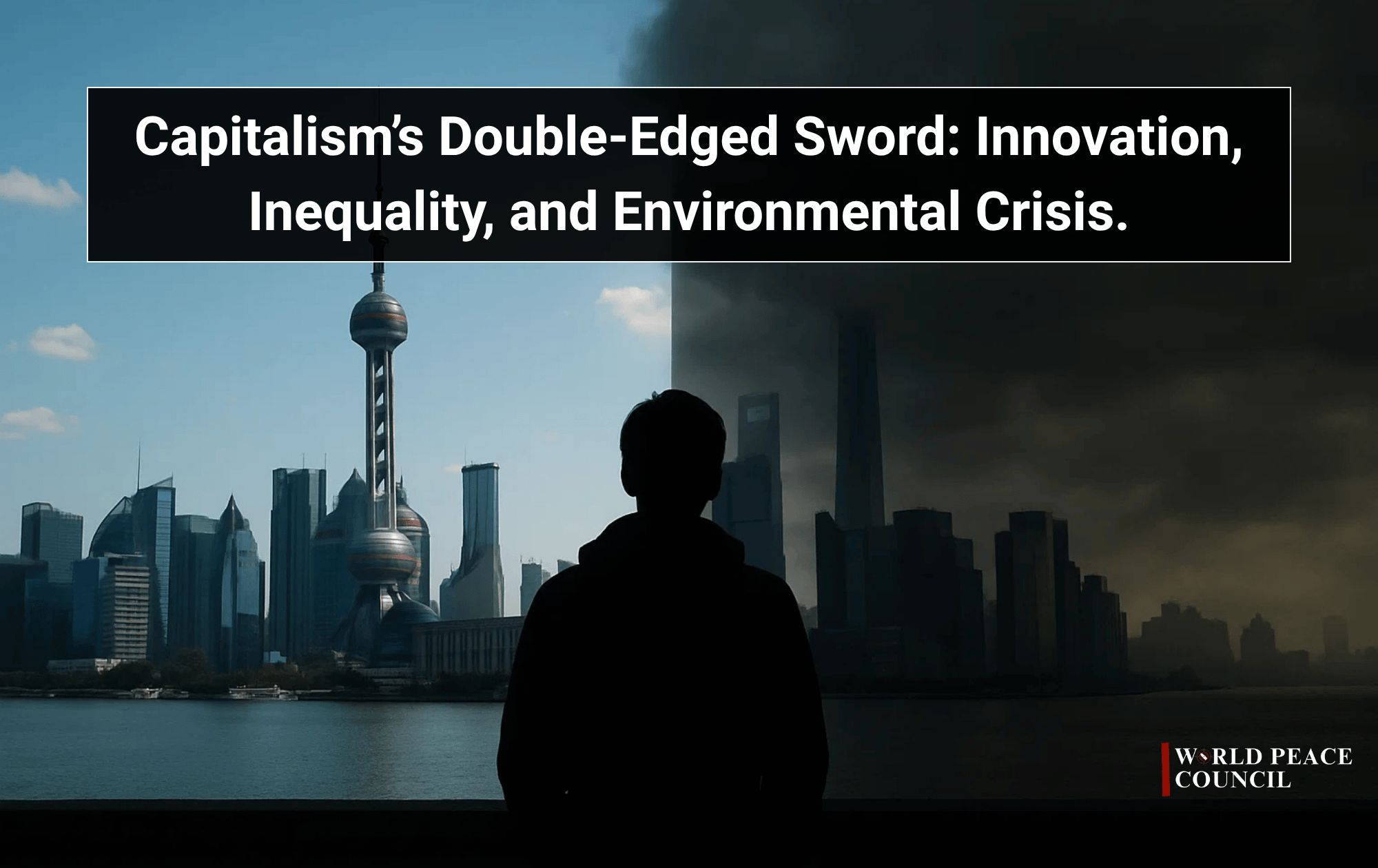
Few systems in human history have transformed the world as profoundly as capitalism. It has lifted millions out of poverty, driven technological revolutions, and connected global markets in ways unimaginable to past generations. Yet, as Burl Minnis argues in World Peace, this same system is also responsible for much of humanity’s suffering, division, and ecological collapse.
Capitalism, he suggests, is not simply an economic framework but the latest manifestation of a much older illusion, the belief that money has intrinsic value. This illusion, which Minnis calls the foundation of the Age of the Swindle, has led humanity to mistake fiction for reality, creating a system that rewards innovation but thrives on inequality and destruction.
In this blog, we’ll explore the double-edged nature of capitalism, how its triumphs and tragedies stem from the same ideological roots, and what lessons World Peace offers for building a sustainable and just future.
The Promise of Capitalism: Innovation and Progress
At its best, capitalism is a system of creative energy. It rewards invention, encourages competition, and incentivizes efficiency. From the Industrial Revolution to the digital age, it has driven extraordinary advances in science, medicine, and technology.
Minnis acknowledges this innovative spirit as a testament to humanity’s natural ingenuity. However, he points out that these achievements are not the result of capitalism’s moral virtue, but of human creativity itself a quality that existed long before markets or money. “Humans are rational, reasonable actors,” he writes, “virtuous to a fault, until ideology corrupts the equation.”
The problem begins when profit replaces purpose. Under capitalism, innovation is rarely pursued for human flourishing; it is pursued for financial gain. The same system that produced vaccines and smartphones also produced mass surveillance, data monopolies, and ecological exploitation. The market ideology turns every breakthrough into an opportunity for profit regardless of its impact on people or the planet.
The Myth of the Free Market
One of the central themes in World Peace is the idea that economic systems are not natural laws but social fictions. The so-called “free market,” Minnis argues, is a myth, a story told to justify inequality and control.
We speak of “the market reacting” or “the invisible hand” as though the economy were a living entity with moral wisdom. In reality, the market is a human construct, a network of choices made by people, governed by laws, and driven by collective belief.
This myth grants the market moral authority it does not deserve. It tells us that if inequality exists, it must be deserved; if corporations pollute, it is simply the price of progress. Minnis calls this the “institutionalization of fiction,” where systems built on illusion are treated as reality. The result is a global economy that rewards greed and punishes compassion.
Innovation’s Shadow: Inequality and Exploitation
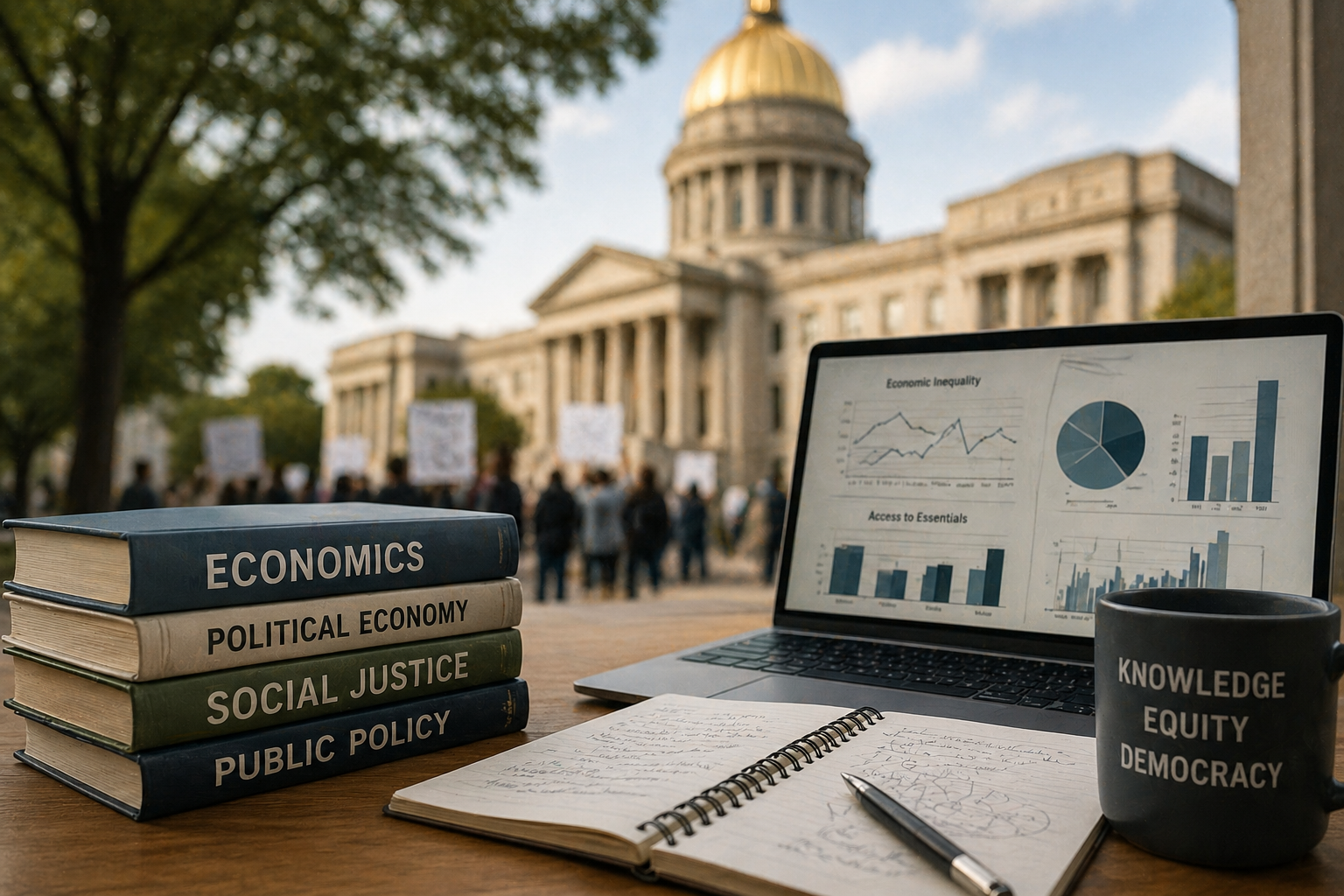
Capitalism’s defenders often point to its ability to create wealth, but rarely ask who owns that wealth. From the Gilded Age to Silicon Valley, innovation under capitalism has always produced winners and losers.
As World Peace explains, inequality is not a side effect of capitalism, it is its engine. The system requires scarcity to function. There must always be “haves” and “have-nots,” employers and laborers, creditors and debtors. This artificial imbalance ensures that power remains concentrated in the hands of a few while the majority struggle to survive.
Minnis refers to this imbalance as part of the system of all human misery, sustained by the ideology of money. “The only problem Man has ever faced for 13,000 years,” he writes, “has been money. Everything else is a symptom.”
In capitalist societies, even basic human needs, healthcare, education, shelter, water, are commodified. They exist not as birthrights but as products. The result is a moral inversion: profit becomes sacred, while life itself becomes negotiable.
The Environmental Cost of Endless Growth
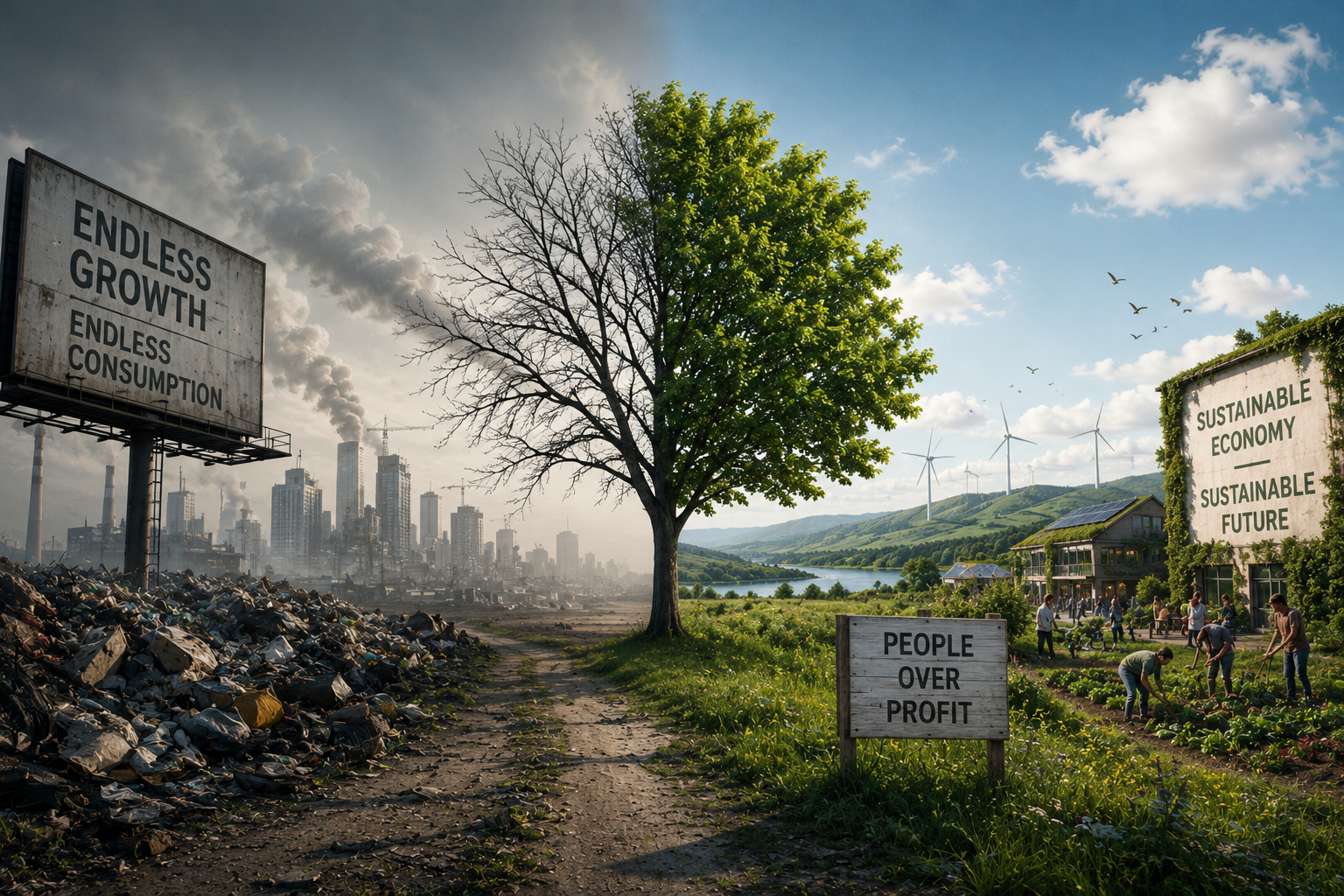
Perhaps the most dangerous consequence of capitalism is its demand for perpetual growth. In nature, nothing grows forever, but in capitalist economies, infinite growth is the central doctrine. The pursuit of expansion at any cost has led to climate change, mass extinction, and ecological collapse.
Minnis identifies this as a direct outcome of monetary ideology, the false belief that economic expansion equals progress. “The planet cannot keep up,” he writes. “We have doubled our energy production just to power our data, and we are suffocating in our own trash.”
The environmental crisis is not a failure of technology but of values. Capitalism treats nature as a resource to be extracted rather than a system to be preserved. Forests, oceans, and species become “assets.” Pollution becomes “externality.” Even the climate itself is now a commodity, traded in carbon markets as if the atmosphere were a business ledger.
In this sense, the Anthropocene, our current epoch of human-driven environmental change is the ultimate expression of capitalism’s delusion: the belief that fiction (money) can override reality (the planet).
The Double Edge: Progress and Peril
To be fair, capitalism has unleashed human potential in ways few other systems could. It has democratized information, improved living standards, and connected billions across the globe. But its double-edged nature lies in the fact that its progress is inseparable from its destruction.
Every technological leap comes with environmental degradation. Every economic boom widens the wealth gap. Every luxury for the few is built on the labor of the many. Minnis calls this the first industrial accident of Man the point at which our inventions began to harm the very world they were meant to improve.
We have become, as he puts it, “a species that can kill itself.” And unless humanity recognizes that capitalism is not a natural order but a collective choice, the system will continue to cannibalize itself and the Earth along with it.
The Post-Capitalist Possibility
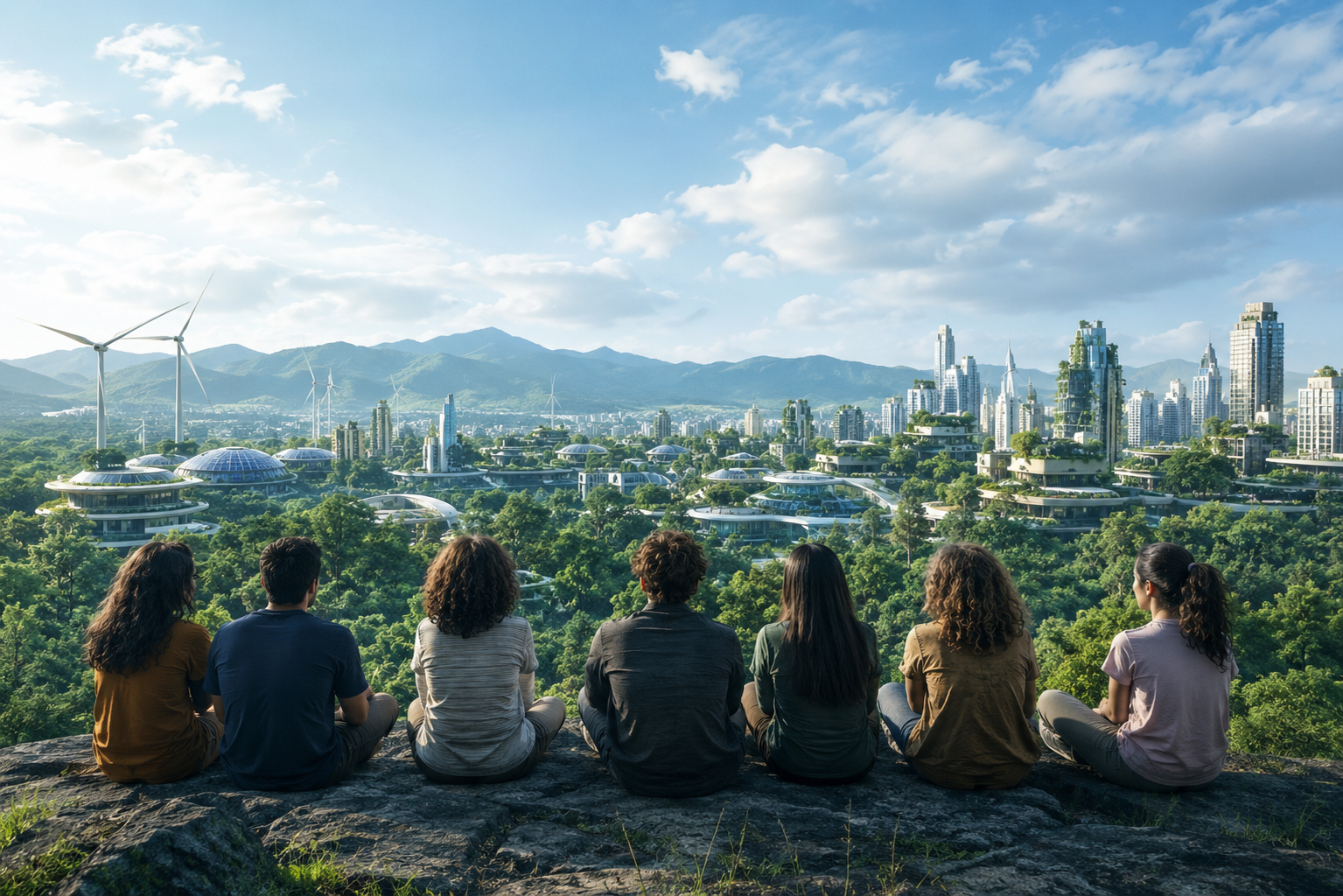
In World Peace, Minnis envisions a world beyond money, beyond markets, beyond ideology a post-monetary society that operates on cooperation rather than competition. His proposal is simple yet radical: abolish money and set all general ledgers to zero.
In such a world, work would continue, innovation would flourish, and goods would circulate but without the mediation of profit. “Everything we do today with money,” he writes, “we’ll do exactly the same way tomorrow without money. Our receipts will just read 0.00.”
This is not a call for chaos but for clarity. By removing money the keystone of the system humanity could dismantle the Age of the Swindle peacefully and restore an ethical economy grounded in reality. Environmental restoration, social equality, and true innovation could then occur without exploitation.
Toward an Ethical and Sustainable Future
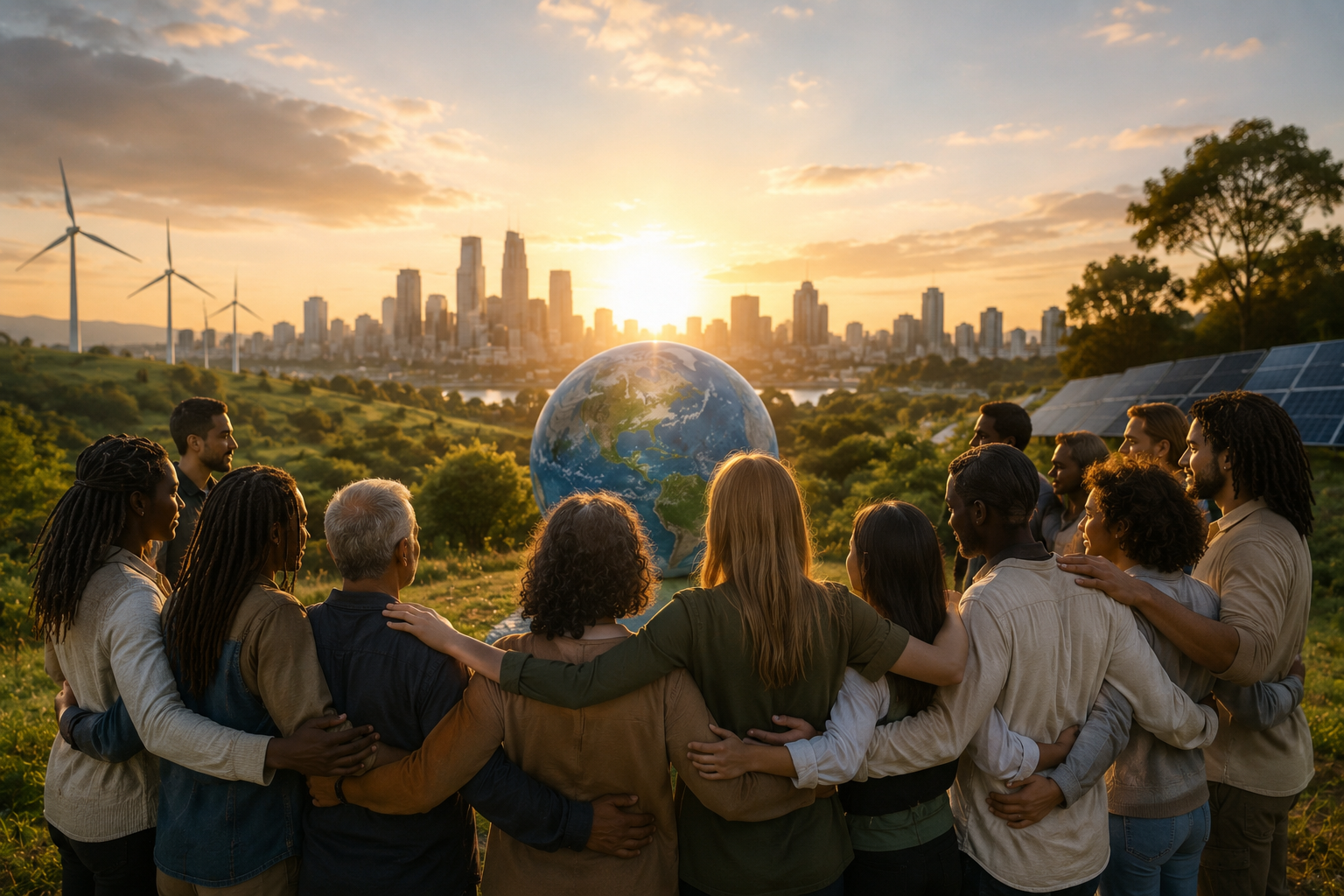
The lesson of World Peace is not that capitalism is evil, but that it is unsustainable when built on fiction. The same ingenuity that built skyscrapers and satellites can build a more just world but only if we stop measuring progress in profit.
True innovation should serve life, not money. True success should be measured in well-being, not GDP. And true freedom should mean freedom from debt, not freedom to exploit.
To heal the planet and ourselves, we must reimagine economics as a branch of ethics not ideology. When that happens, innovation, equality, and sustainability will no longer be at odds but will coexist as parts of a single, moral vision for humanity.
Conclusion: Rebalancing the Scales
Capitalism’s double-edged sword has given us both brilliance and ruin. It has proven that humanity is capable of extraordinary creation, and equally extraordinary destruction.
As Burl Minnis argues, the future of the human species depends on our willingness to face the truth: that money, markets, and growth are not ends in themselves but tools that can be remade, redefined, or replaced.
When we stop serving the fiction and start serving reality, the balance will shift. And in that moment, capitalism’s sword once turned against humanity can finally be forged into an instrument of peace.
Readmore