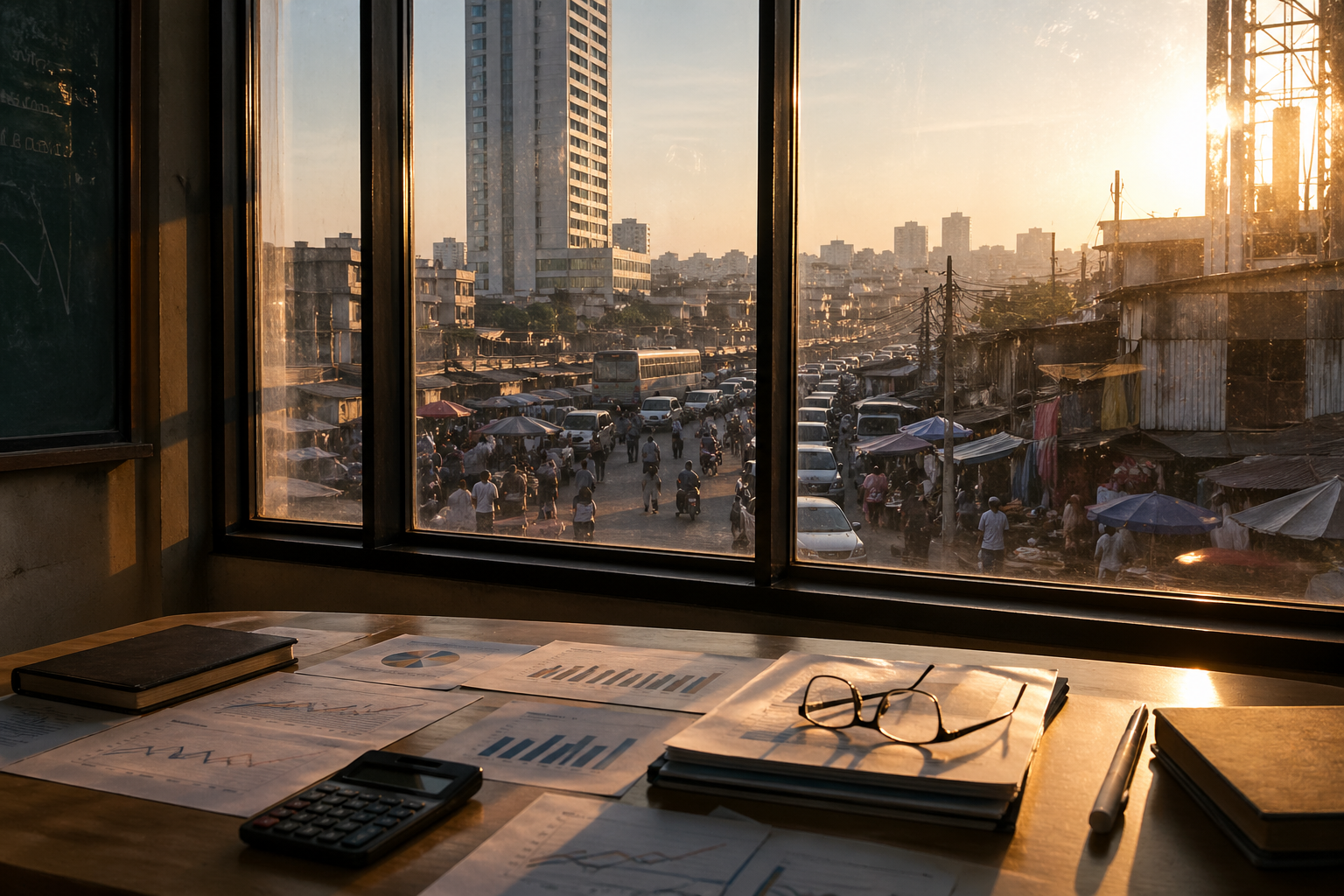
For more than a century, nations have worshipped at the altar of economic growth. Every policy, investment, and political promise seems to orbit one idea: that higher GDP equals progress. Yet as Burl Minnis argues in his groundbreaking book World Peace, this obsession with growth is not a sign of advancement it is a symptom of delusion.
Minnis challenges one of the most deeply ingrained beliefs in modern society: that economic expansion is inherently good. In his view, growth has become an ideology, a collective fiction that mistakes motion for progress, and consumption for prosperity. By elevating GDP to the status of a moral compass, humanity has sacrificed well-being, equality, and ecological sustainability in pursuit of an illusion.
This blog explores the roots and consequences of the growth ideology, revealing how our fixation on expansion may be costing us our planet, our peace, and even our humanity.
The Birth of the Growth Ideology
According to World Peace, the obsession with growth began during the Age of the Swindle, the historical moment when humanity replaced reality with economic fiction. Money, originally a survival tool, became the foundation of the monetary ideology that rules our world today.
From that point onward, Minnis explains, value was no longer tied to the natural world or human need but to abstract numbers production, profit, and accumulation. When economists in the 20th century created Gross Domestic Product (GDP) as a measure of national progress, they turned this illusion into a global doctrine.
But what does GDP really measure? It records the total monetary value of goods and services produced regardless of whether they improve or harm human life. Wars, oil spills, and hospitalizations all increase GDP. So do deforestation, pollution, and overconsumption. The ideology of growth, Minnis warns, “confuses quantity with quality, mistaking the fever for the cure.”
When Progress Becomes Pathology
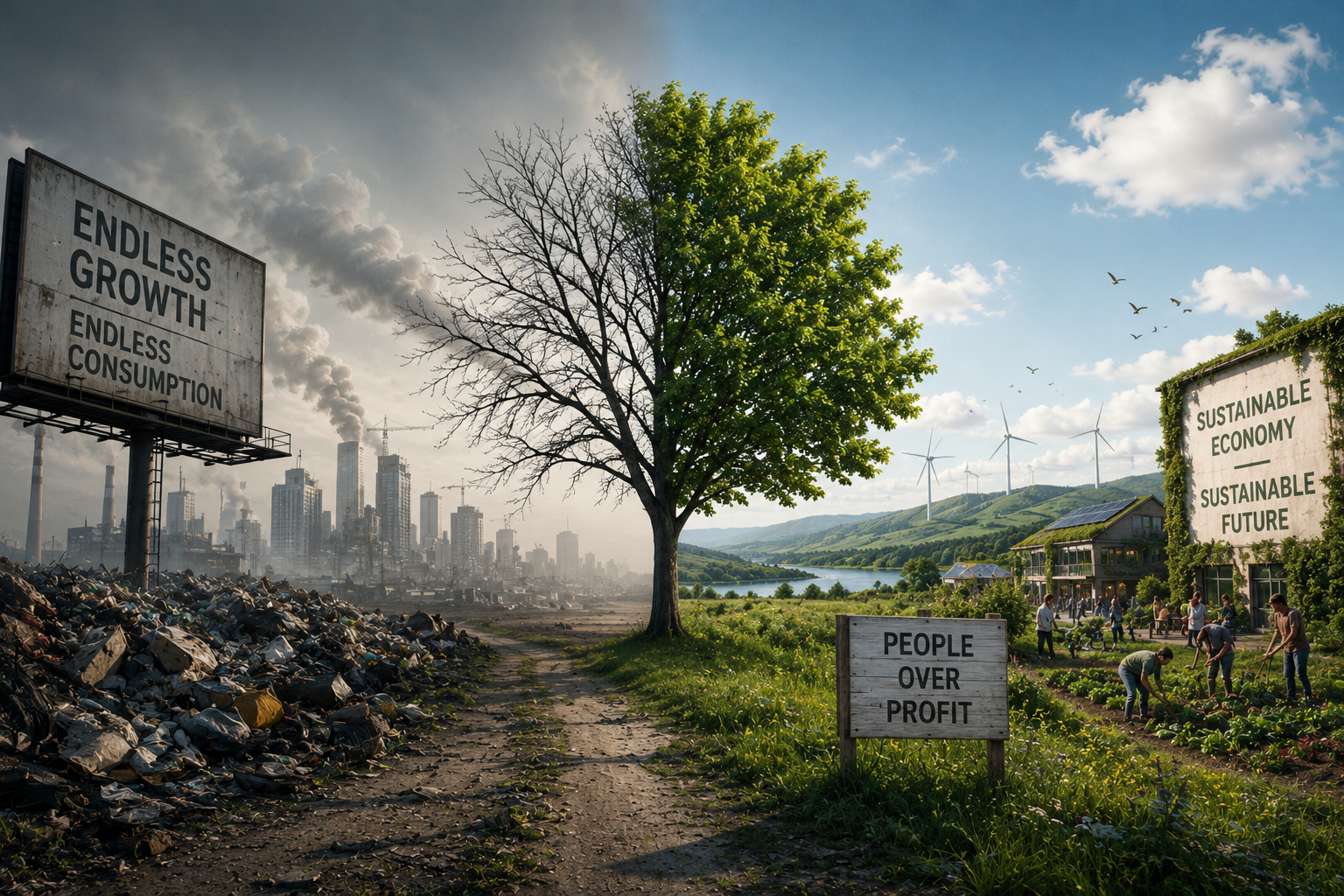
In natural ecosystems, growth has limits. Trees stop growing when mature; species balance themselves within their environment. But economies, driven by capitalism and monetary ideology, are built on the premise of endless expansion. The more we consume, the healthier the system appears even as the planet itself sickens.
Minnis describes this as a form of collective insanity: “The only species that destroys its habitat to measure its success is Man.” Under the ideology of growth, exploitation becomes efficiency, consumption becomes virtue, and waste becomes progress.
This pathological growth drives the environmental crisis the depletion of forests, oceans, and air as well as the social crisis of inequality. Wealth concentrates in the hands of a few while billions live without access to basic needs. Yet even this suffering is absorbed into the illusion of success, as rising prices and debts inflate the GDP.
The result, Minnis argues, is a world that measures its prosperity by its capacity for self-destruction.
The GDP Illusion: Numbers Over Life
The fixation on GDP growth blinds governments to the realities of human well-being. Politicians promise to “grow the economy” as if it were a moral duty, while ignoring that economic expansion often correlates with declining mental health, environmental degradation, and loss of community.
Minnis sees GDP as one of humanity’s most dangerous fictions a statistical mirage sustained by collective belief. “We treat GDP as a god,” he writes, “and sacrifice our children, our oceans, and our sanity to it.”
In World Peace, he likens GDP to the early myth of money itself a symbol mistaken for substance. Just as the invention of currency turned human cooperation into competition, GDP turned life into ledger. It counts everything that can be sold, but nothing that truly matters: love, justice, beauty, time, or peace.
The problem, then, is not just economic it is philosophical. Humanity has forgotten the difference between value and price.
The Human Cost of Endless Growth
Beneath the glossy surface of rising GDP lie profound human costs. Overwork, stress, and debt have become the invisible engines of growth. Minnis argues that societies built on constant economic acceleration inevitably produce burnout not just of resources, but of people.
He writes, “Humans are not machines for the production of wealth. We are the wealth.” Yet, in the growth ideology, people are reduced to “human capital,” valued only by their productivity. Time for family, rest, or creativity becomes a luxury. Communities fracture under the pressure to compete.
Even in wealthy nations, citizens are caught in what Minnis calls “the economy ideology trap” where success is measured by income rather than fulfillment, and survival depends on participation in systems that exploit both people and planet.
The irony, he observes, is that we could all live better if we simply stopped trying to live “more.”
Growth and the Environmental Collapse
The link between economic growth and ecological destruction is undeniable. Every new product, factory, or highway demands raw materials and energy. The faster economies grow, the faster ecosystems collapse.
In World Peace, Minnis frames this as the ultimate moral contradiction of modernity: the idea that humanity can achieve prosperity by consuming the world that sustains it. He writes, “We have mistaken Earth for inventory.”
The Anthropocene, our current age of human dominance, is defined by this paradox. We celebrate progress as glaciers melt, rainforests burn, and species vanish. We call it development, even as it drives extinction.
According to Minnis, this self-destructive cycle stems from the first ideological lie the belief that money equals value. Until that fiction is dismantled, every attempt at “green growth” or “sustainable capitalism” will remain a contradiction. You cannot heal a disease by feeding it.
Beyond Growth: Toward a Moral Economy
So, if growth is the problem, what replaces it? Minnis offers a radical yet simple answer: abolish money and set all general ledgers to zero. In this post-monetary economy, humanity would continue to work, innovate, and exchange but without the illusion of profit.
He argues that when money, the keystone of the system of all human misery, is removed, the ideology of growth collapses peacefully. “Everything we do today with money,” he says, “we’ll do exactly the same way tomorrow without money. Only our receipts will read 0.00.”
In this system, the measure of progress would not be GDP but well-being health, harmony, and balance with nature. Economic justice would not depend on redistribution but on the recognition that value is shared by all, not owned by few.
This vision is not utopian but realistic, grounded in the simple truth that no living system can grow forever. The end of growth, Minnis insists, is not the end of prosperity it is the beginning of peace.
The Cost of Ignoring Reality
The greatest danger of the growth ideology is its detachment from reality. We act as though numbers can replace nature, as though charts can substitute for ecosystems. Yet every empire built on illusion eventually collapses.
Minnis warns that unless humanity “snaps out of it,” the cost of growth will be total the extinction not just of species but of meaning itself. “We are the only species,” he writes, “that mistakes self-destruction for success.”
But the good news is that fiction can be unlearned. By rejecting monetary ideology and embracing a moral economy, humans can rediscover what truly matters: empathy, reason, cooperation, and respect for life.
Conclusion: Redefining Progress
The ideology of economic growth is humanity’s grandest illusion and its most dangerous. It has promised progress but delivered peril; it has built skyscrapers but burned forests.
As World Peace reminds us, real progress is not measured in profits or percentages, but in peace, equity, and sustainability. The future depends not on growing the economy, but on growing our consciousness.
The question is no longer how much we can produce, but whether we can learn to live without destroying what we love.
Because when the ideology of growth finally ends, reality and humanity can begin again.
Readmore